Welcome
Red Bucket Farm is an urban farm on a quarter acre property in an average residential neighborhood. We are located in Wisconsin, USDA Zone 5. We focus on chickens, bees, orchard fruit, and raised garden beds for fruits and veggies. We hope to reduce our footprint on the planet by growing some of our food, reducing our use of fossil fuels, and gardening with sustainable practices. Thanks for visiting!
Sunday, May 20, 2012
Bobbing for Apples
Yesterday the weather was unseasonably warm---90 degrees---and the chickens were feeling the heat. The girls instinctively know to stay in the shade, and they each dig a little hollow in the dirt to seek the coolness of the earth. We also provide a trug of wet sand so they can take turns in the sand bath. Chickens do indeed pant like a dog, and they hold their wings away from their bodies when quite warm.
One of my teenagers decided that it would be fun to teach the girls to bob for apples in the heat of the day. We cut an apple into small bits and tossed them into a trug of water. It was amusing to watch the girls peck out the apples. They continued to drink from the extra water all day and I think they appreciated a little diversion from the heat.
A word of warning: I've read that chickens drown quite easily, so don't try this little trick without close supervision!
Wednesday, May 2, 2012
More Swarms
Perhaps I was too eager in my blog post this morning. At 12:45 pm, my brave little swarm of bees absconded the red hive. It took them three minutes to exit, and about ten minutes to form a cluster around the queen in my spruce tree. This swarm is slightly larger than a softball.
While I was photographing the smaller cluster, I noticed an even larger group of bees higher in the tree (see above). This leads me to believe that both of my hives swarmed yesterday while I was out. I'm guessing the larger swarm is from the stronger blue hive, and the smaller swarm is from the weaker green hive, which obviously isn't weak at all if it's got enough energy to swarm.
Fortunately, I'm expecting delivery of a package of bees this week for the new red hive. Perhaps I'll even remember to cork up the entrances for a day or so to encourage them to stay.
Catching a Swarm
In the spring, the queen begins laying eggs in huge numbers in one central location of the hive known as the brood nest. When the bees perceive that the brood nest is getting too crowded, they prepare their current queen for flight by slimming her down while simultaneously grooming a new queen in one of several queen cells. Before long, several hundred or even thousand bees will gather up the queen and leave for a new home, while the remaining bees will stay and carry on with their new queen.
Last week's practice swarm warned me that this exodus would happen soon, but the weather turned cold and rainy, postponing the event until yesterday. In the morning I could sense that the bee yard was agitated, but my day's events called me away. By late afternoon, I noticed a cluster of bees on the foundation of my greenhouse. They were certainly clustered around a queen, and the day was quickly passing with storms predicted for night.
We jumped into action and scooped them into a shoe box. Homeless bees aren't aggressive, so it's not as scary as it sounds. Then we put the shoe box into the empty red hive along with two top bars of clean new comb (donated from the blue hive). I also gave them a jar of sugar water.
This morning they are still there. I'm keeping my fingers crossed that they won't abscond.
Friday, April 20, 2012
Rosie's Eggs
This is Rosie, a Red Star (hybrid sex link), who is now approaching two years old. Rosie is the boss of our flock and a very heavy producer of beautiful brown eggs. We're noticing that as she gets older, her eggs are changing.
Rosie was hatched May 17, 2010, and began laying eggs on September 22, 2010. Since then she has given us 530 eggs, which averages to 28 eggs per month for eighteen months. In the photo above, Rosie's egg is the lovely caramel brown color. In my egg journal, her eggs were first described as large and brown. After her first year, the description changed to jumbo brown.
Sometime over the winter, Rosie's eggs began to change. They first developed hard lumps on the ends. Initially, I thought it was a calcium deficiency, but I learned that it's really an excess of calcium. Later, little sandy bits (also calcium) appear randomly on the shell. The color has faded and the strength of her shells has diminished significantly. I'm sure she's getting enough calcium, but I wonder if her body is absorbing it properly. The good news is that she seems otherwise quite healthy and unconcerned. She's down to about 25 eggs per month now, which is quite remarkable for her age.
In a commercial facility, Rosie would have been dog food months ago. I won't be able to keep unproductive chickens indefinitely, but for now Rosie's future is secure. We think she's amazing!
Thursday, April 12, 2012
Moving the Greenhouse
On Saturday we moved the greenhouse to a sunnier location. The aluminum frame greenhouse with polycarbonate panels isn't very heavy, so carrying it intact wasn't as difficult as anticipated. After removing the plastic shelving units and all the plants and seedlings, we unscrewed the greenhouse from its 4x4 wooden base and attached it to 2x4s for carrying up the hill. Next we carried up the wooden base itself and set it on the lawn.
Preparing the new site was most time consuming and labor intensive. We leveled a site with concrete blocks. In the photo above, you can see the kids in the background bringing up the blocks from the old site.
Once the bricks were in place, we transferred the gravel flooring from the old site to the new, using a wheelbarrow and old fashioned elbow grease.
Finally, we placed the 4x4 wood foundation on the bricks and reattached the greenhouse. I was surprised how quickly this project transpired---just a morning's work, less time than assembling the greenhouse when we first built it.
The new location is significantly more sunny than before, and will help extend the growing season in spring and fall. Also, it's closer to the house and more convenient for retrieving fresh herbs when I'm making dinner. We're happy with this improvement to our urban farm.
Tuesday, April 10, 2012
Milky Anti-freeze
Record setting warm weather in March produced a very early blossom period for fruit trees and bushes here at Red Bucket Farm. We knew it was too good to be true. This week's sub-freezing temperatures have Wisconsin fruit growers in a panic.
I inquired on the yahoogroups organic fruit tree growers list whether there were any practical, organic measures I could take to protect my backyard orchard trees from overnight freeze. There was plenty of expert advice from the folks on that list. I learned that cellular integrity starts with calcium. Getting minerals and carbohydrates into the cells will lower the freezing point inside the cells and provide some frost protection.
Last night and tonight I sprayed my fruit trees and bushes with a mixture of water, milk (for calcium and phosphates), molasses (for carbohydrates) and fish emulsion (for minerals and oils).
Early this morning our thermometer indicated 31 degrees, and the water in the chicken coop was not frozen. We may have avoided serious damage last night as the breezes kept the air moving. After a windy and cold day today, the wind has calmed down tonight and the forecast is for slightly colder temps than last night. We are worried that tonight will be more difficult for the blossoms and tiny fruit.
Sometimes it's strangely stressful to be an urban farmer. My livelihood certainly does not depend on my fruit crop; I was simply looking forward to my homegrown fruits. Whether the fruit survives or not, it's gratifying to live a little closer to the elements, to be aware of every degree of temperature and the changing breezes.
Tuesday, April 3, 2012
Fruit Blossoms
The unusually warm spring weather in March has brought early April blossoms to Wisconsin. All eight blueberry bushes at Red Bucket Farm have fruit blossoms as seen above. It's taken a few seasons to establish these bushes, and we're pretty happy to see them blooming enthusiastically.
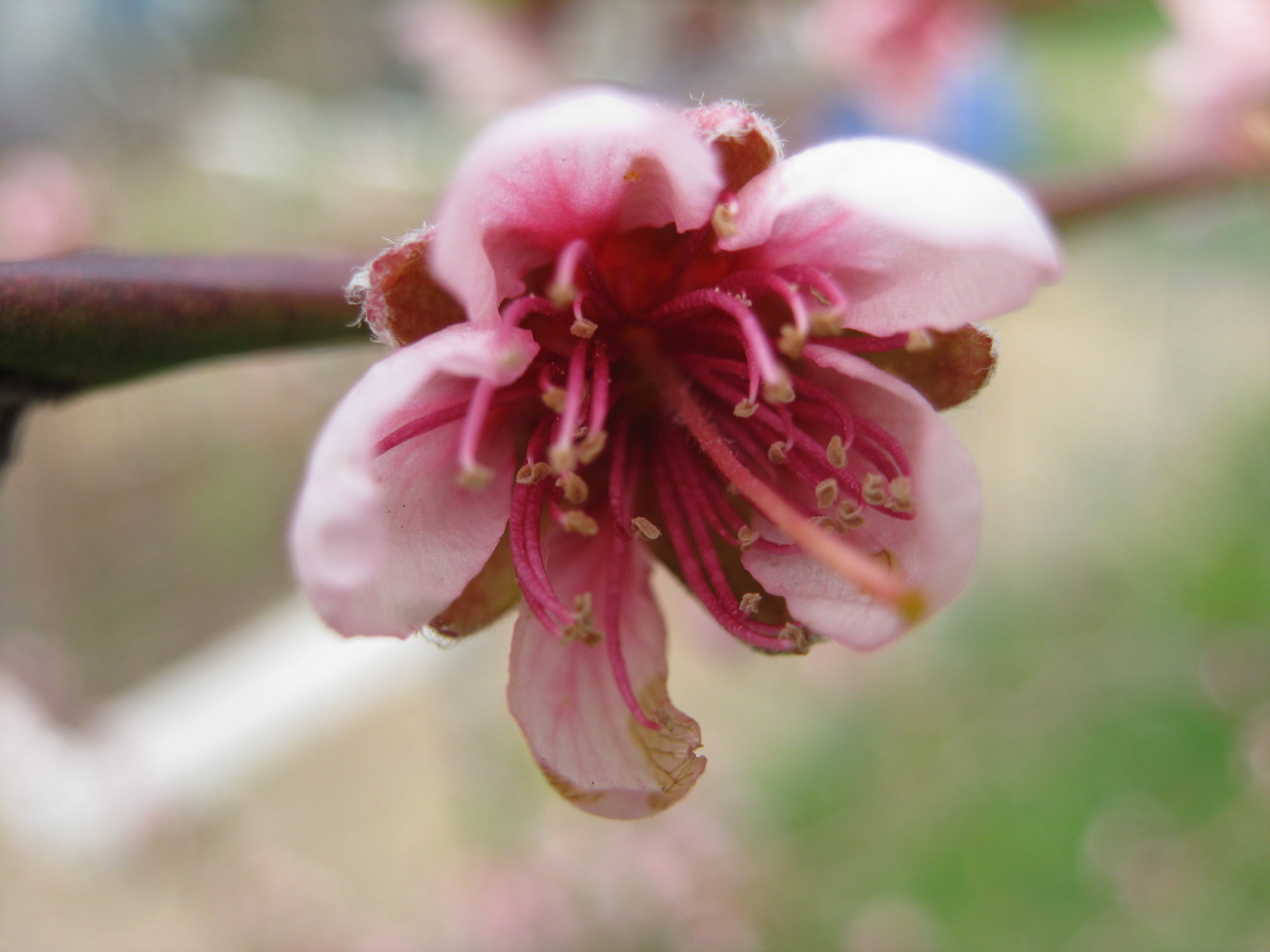
Our three-year old peach tree is full of pink blooms and the bees are busy pollinating them. This year we'll remember to thin the fruits for increased harvest. The younger peach tree and apricot trees have finished blooming.
We have three varieties of sour pie cherry trees--Meteor, North Star, Montmorency. They tend to bloom and ripen at slightly different times.
All eight currant bushes are blooming, seen above. The bushes are heavily loaded this year and we're hoping for an overflow crop. We're looking forward to a large batch of currant jam.
Finally, the ubiquitous dandelions have begun to bloom. Most folks see them as weeds, but to me they are bee food.
Enjoy the spring blossoms!
Subscribe to:
Posts (Atom)