Welcome

Red Bucket Farm is an urban farm on a quarter acre property in an average residential neighborhood. We are located in Wisconsin, USDA Zone 5. We focus on chickens, bees, orchard fruit, and raised garden beds for fruits and veggies. We hope to reduce our footprint on the planet by growing some of our food, reducing our use of fossil fuels, and gardening with sustainable practices. Thanks for visiting!

Tuesday, January 29, 2013

Lighting the Coop


We began lighting our chicken coop a week ago. We installed compact fluorescent bulbs in the rafters above the covered run and the hen house. The lights shine through the hardware cloth ceiling to the run below. With this arrangement there is very little chance that the coop will catch fire.

Coop fires happen too frequently. Many farmers use wood shavings, hay and straw as bedding materials, which will make any coop a tinder box. It's important to be very cautious when lighting or heating a chicken coop.


Our lights are set on a timer to turn on at 4 am and off at 7 am. This extends the day for the hens to about 13 hours of light, which is roughly the equivalent of daylight in April. We hope this is enough light to stimulate egg production. We chose to not extend the light in the evenings because this confuses the birds regarding bedtime. If the lights shut off suddenly at 9 pm, it will be too dark for the girls find their way to the roost. 

We'll stop using the lights as the spring progresses. We plan to resume lighting later in the year, but not until after the girls have a chance to molt. If we begin lighting too early in the fall, it may cause the hens to delay their molt until mid-winter when it is dangerously cold weather. Instead, we'll allow the girls to have a natural rest in the fall, and begin lighting again after the winter solstice. 

The new schedule has been working reasonably well. The girls are up early in the morning, scratching and feeding in their coop. But the last week has been a strange transition for them. They've gone to bed at 4 pm in spite of the continuing day light. I think they're tired out with the sudden extension of their day. Perhaps they need their beauty sleep! 

Still....no eggs yet. 

Thursday, January 17, 2013

Delayed Egg Laying


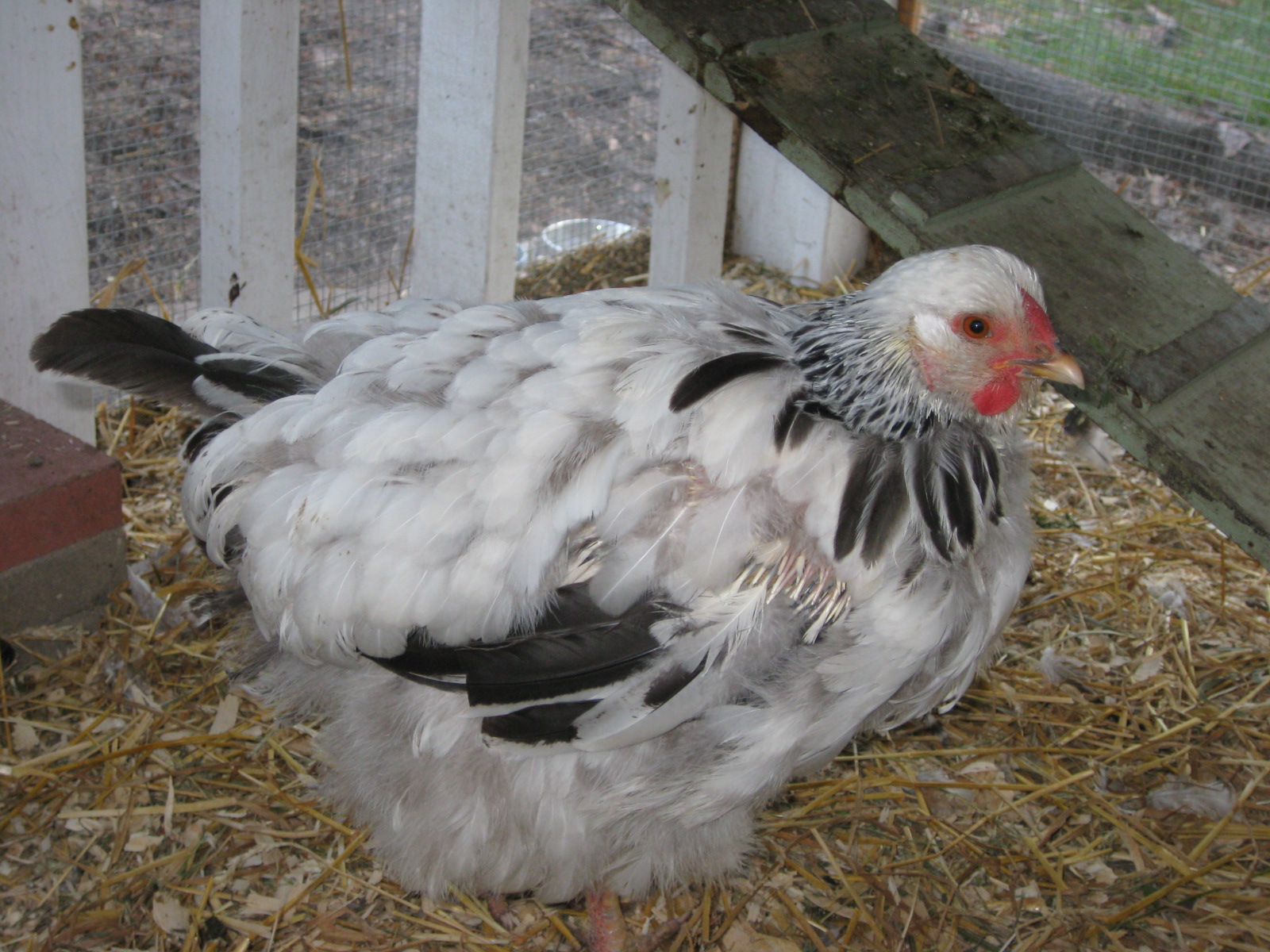
Remember Thelma and Louise? These two girls joined our urban farm in late September 2012. We purchased them from a local farmer as pullets about three months old. They are a Delaware-Buckeye hybrid, which should be an excellent egg layer and winter hardy.

It was our hope that these two would start laying eggs around Thanksgiving or Christmas, but the New Year has arrived and they are still unproductive. They are now fully mature and could be laying.


I've just learned that in order for a spring chick to begin laying in the same season that she's hatched, she must have an early start. Chicks hatched in March and April will certainly begin to lay in the late summer or fall, when daylight is still adequate to stimulate egg-laying hormones. But chicks hatched in mid to late summer won't mature until later in the fall and early winter, when daylight has become too short. (Note to self: order chicks for early delivery!)

After three months of feeding expensive organic chicken feed to unproductive birds, I'm reconsidering the all natural daylight approach to chicken keeping. These girls are working hens; I can't afford to keep chickens as pets. All they need to stay productive is more light. Stay tuned for the update.

Friday, January 4, 2013

Mail-Order Chicks

Although there is nearly a foot of snow on the ground, it's time to think about placing an order for spring chicks.


Why do we mail order chicks? Of course, chicks are available each spring at the local farm store, but that requires a minimum order of ten chicks and all of them must be of the same breed. It's also possible to network with local farmers, but we're limited to whatever breed the farmer has available.

As urban farmers, we're restricted by ordinance to a handful of chickens. We'd like our little flock to fit our needs and provide variety. In the last few years, some hatcheries have made it possible for backyard flock owners to order as few as three chicks from a wide variety of breeds, and it's easy to place a mixed order.

The day-old chicks are carefully packaged with a warm gel pack and shipped express mail. There is a risk that one of the little babies might not survive the trip, but overall the procedure is quite successful. The cost of shipping is not insignificant (around $35), so it's nice if friends can combine an order and share the shipping cost.


Hatcheries plan several weeks ahead of shipping dates so that they can keep up with demand of popular breeds. Also, it's good idea to plan the raising of chicks into your family schedule and summer vacation plans. Our family hopes to raise our chicks early enough in the spring that we can incorporate the new birds into the flock before we take a summer camping trip. We'll allow at least three months for the chicks to reach an adult size.

So get a mug of hot chocolate or coffee and start researching breeds. We'll be placing our order soon. Think spring!

Tuesday, January 1, 2013

Unproductive Hens


I'll admit that I'm pretty frustrated with my backyard flock of hens. We haven't gathered an egg from these girls since November 3---a full two months without fresh eggs. Ours is a fairly common predicament. We have a couple of pullets who haven't arrived at maturity and aren't yet laying, and we have a few older hens who are stuck in the annual molt.

A chicken's annual molt, which occurs in the fall, lasts anywhere from a month to three or even four months depending on the age of the hen. The older a hen gets, the more stressful and time-consuming it becomes for her to shed old feathers and grow new ones. 

A spring chick will grow over the summer and begin laying eggs in the fall. She might experience a light molt her first fall, which will reduce her egg production but probably not halt egg laying entirely. She's likely to produce eggs her first winter and lay abundantly through spring and summer. But her second autumn will induce a more dramatic molt, and she is likely to stop producing eggs completely while her body works on growing new feathers. After the molt she'll start to produce eggs again, but her eggs will be larger and fewer than previously. As each year passes, her molt will become increasingly severe and her eggs less abundant.

As an urban farmer with a limit to flock size, how long do I continue to feed unproductive hens? Although the girls are obviously healthy and normal, when is it okay to cull the flock and raise new chicks? How can I justify the expense of chicken feed without any eggs?

Tuesday, December 25, 2012

Blizzard & Bees


A few days ago, Mother Nature delivered a significant blizzard---around 18 inches of snow and high winds. Since then, temperatures have remained below freezing and there has been very little melting. The day after the blizzard, I cleared the snow off the beehives and repaired the plastic wrap we use as wind break. Although the snow functions as insulation, I prefer to clear the roof of the hive so that the black tar paper wrap will help absorb as much heat from the sun as possible.

Yesterday I noticed a few dead bees laying on top of the snow immediately outside the hive entrances. I think this is a good sign that the housekeeping bees are cleaning house. I hope the hives are functioning normally in there!

Thursday, December 6, 2012

Carrots--Storage & Menu


In September and early October, I harvested a ridiculous amount of carrots---around 55 pounds. These aren't picture-perfect long slender carrots. Most of them are gnarly and twisted, which is clearly my fault for not having thinned out the seedlings properly. In fact, I intentionally planted them in bunches based on a gardening tip that I had read. Since I'm not selling produce, it doesn't matter to me what shape the carrots take. These carrots are delicious and sweet.

We've experimented with long term storage of the carrots. Our best method so far is simple. We store them in zip-lock bags inside the refrigerator. Our extra fridge is kept warmer than our primary fridge, mostly for storing root vegetables and home brewed beer and cider. It's important to prevent the carrots from dehydrating without simultaneously molding the squash and onions. Hence, we use zip-lock bags.


We've gotten creative with carrots recipes: carrot cake, braised and glazed carrots, mashed carrots with garlicky yogurt. We add carrots to soups, omelets, and stir fries. Yesterday I made sweet carrot pie, which is similar to pumpkin pie. I should probably look for that carrot jam recipe, too.  I think it's important to remember that slightly deformed vegetables taste perfectly fine and don't need to be recycled to the compost pile.

Friday, November 30, 2012

I think I can


Do you remember the classic children's book called The Little Engine That Could? It was a story about a Little Blue Engine who was determined to pull a train of toys and food over the mountain to help children on the other side. And her mantra was "I think I can, I think I can....."


My two pullets, Thelma and Louise, have adopted this as their new mantra. Every day, Thelma and Louise climb into two adjacent nest boxes, where they sit and try very hard to accomplish something wonderful. The older hens stand nearby, cooing encouragement in soft voices. So far there are no results, but these girls are nearly mature and ready to lay. I believe in a short time, they will have something fabulous to announce to all the neighbors.

I think I can, I think I can.....