Welcome

Red Bucket Farm is an urban farm on a quarter acre property in an average residential neighborhood. We are located in Wisconsin, USDA Zone 5. We focus on chickens, bees, orchard fruit, and raised garden beds for fruits and veggies. We hope to reduce our footprint on the planet by growing some of our food, reducing our use of fossil fuels, and gardening with sustainable practices. Thanks for visiting!

Showing posts with label pullets. Show all posts

Saturday, August 2, 2014

Marilyn's First Egg


Marilyn laid her first egg today! She's been preparing for this big moment for a few weeks. Yesterday morning she snuggled in a nest box for a good thirty minutes--she was practicing--and for the last couple of weeks she's been hanging out in the hen house watching the older girls carefully as they lay. This morning Marilyn was mighty bossy to the other pullets, and I could tell she was feeling all grown up and important.


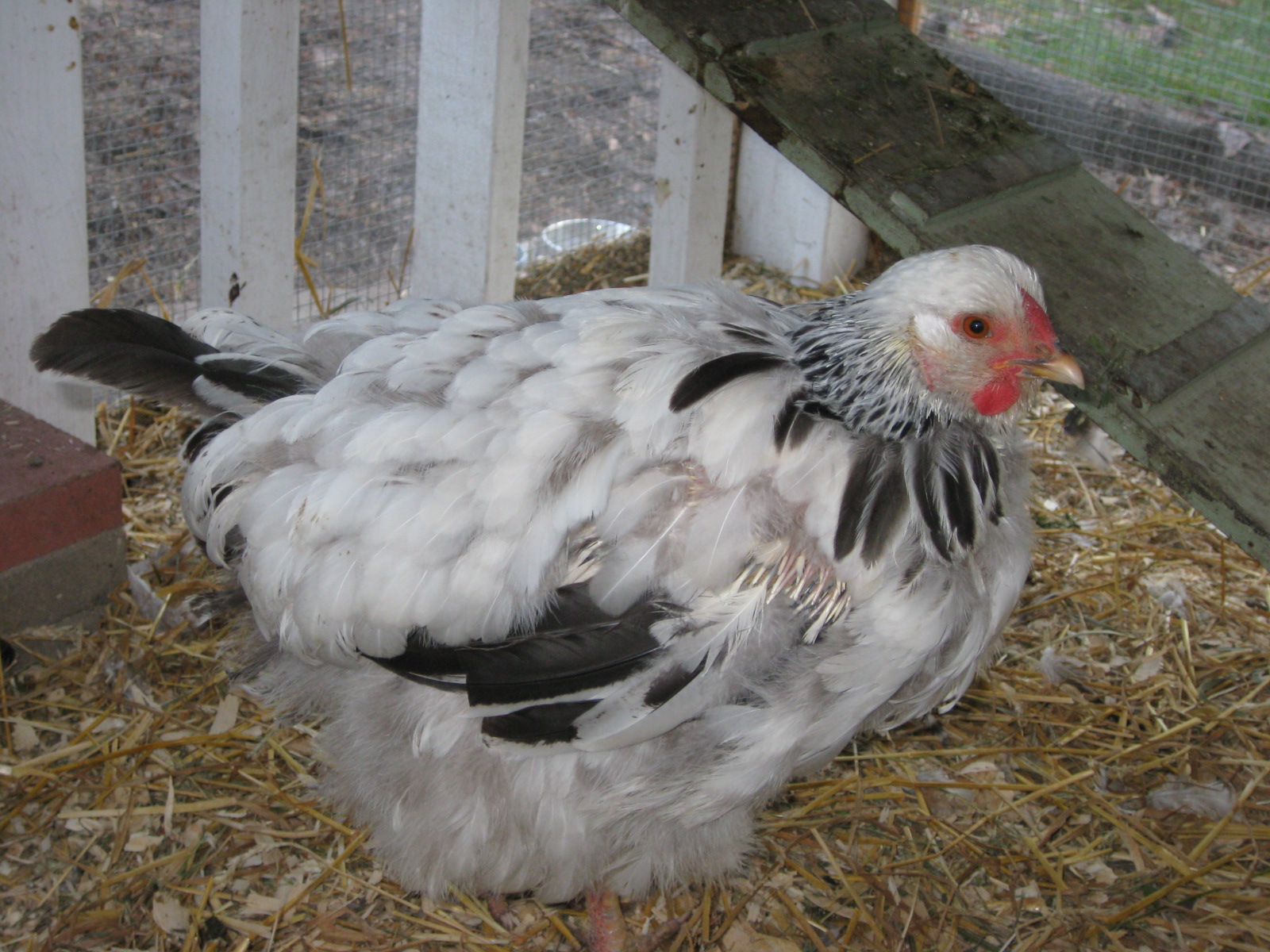
Marilyn is a Silver-Laced Wyandotte. We named her after actress Marilyn Monroe because a Wyandotte is a full-bodied and curvaceous hen, and the silver lacing on her plumage makes her an awfully glamorous addition to the chicken yard. Marilyn was hatched on March 10, 2014. The previous Wyandotte on Red Bucket Farm took a full seven months to lay her first egg, so Marilyn is ahead of schedule.


This morning's egg is tiny--less than two inches long--with a perfectly smooth and shiny tan-colored shell. Subsequent eggs will grow in size. Marilyn has finished bragging and strutting. She's settled in the dirt for a quiet afternoon in the shade. Well done, Marilyn!

Thursday, May 8, 2014

Accidental Rooster


Our spring chicks are now eight weeks old and no longer little balls of fluff. They have grown adult feathers and spend their days outside comfortably in the portable coop. The only problem we're experiencing is that one of them isn't a pullet (hen). He's a cockerel and he is quickly becoming a rooster.


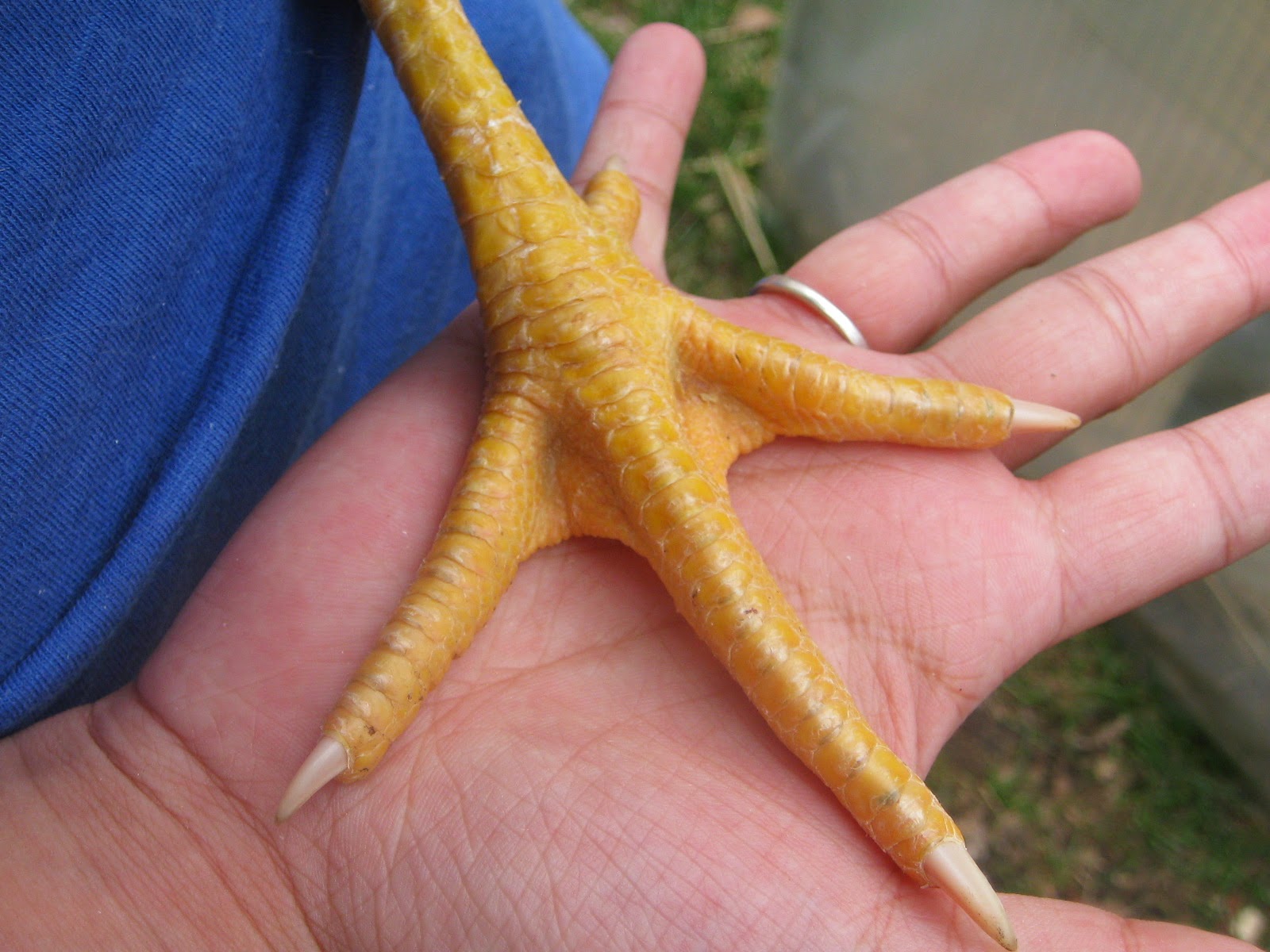
We named him Bob. His feet are huge. His comb and wattles are impressive for only eight weeks. He's bigger than the pullets in his breed (White Rock), and he's much bigger than the other breeds (Australorp, Wyandotte, Americauna). He protects all of his girls dutifully.


The Chicken Whisperer came home for a short visit today. When she picked up Bob, he immediately raised his hackles and was as fierce as possible, but soon calmed down. Impressive, isn't he?


Roosters aren't allowed in our municipality, so Bob will move on soon. It's been fun to watch his distinctly rooster behaviors. We'll miss him. I think....

Wednesday, February 12, 2014

Green Egg


Cassie the Easter Egger has finally started laying eggs again! Her last egg was Dec. 21, nearly eight weeks ago. It's normal for molting hens to stop laying in the winter, but Cassie is a pullet and didn't molt. It's also normal for hens to lay fewer eggs during the dark months. Cassie has been a bit disappointing, eating a lot and providing little in return. She's back in production now, which will keep her from the soup kettle for a while. Her green eggs are far more beautiful than my limited photography skills can demonstrate. Welcome back, Cassie!

Monday, September 30, 2013

Pullets First Eggs

Some hens begin their egg-laying career with little fanfare, while other hens require extra encouragement. Generally speaking, I do not fuss over my hens a great deal. It's true they have fabulous living quarters and excellent organic, locally-milled food, but I do not hug them, or hold them on my lap, nor do I sing to them, or read them poetry or write poetry about them (although I love the folks who do all those things). My girls are members of the urban farm team, and when their time is up, it's good that I'm not too attached to them emotionally. 


Andromeda (the Barred Rock pictured above) arrived at maturity and began laying a few weeks ago with nothing more than a happy little crow. It's easy to see when a pullet is ready to begin laying eggs. She'll begin hanging around the nest boxes, quietly watching the older girls. Andromeda prefers to be left alone to accomplish her morning ritual, dutifully giving us one medium-sized light brown egg. She minds her own business and rarely calls any attention to herself.

 
Evidently, not all the girls understand the working rules around here. Cassie (the Easter Egger in the photo above) has been like Velcro for the last couple weeks. She's always underfoot, rubbing against my ankles as if she's a kitten. She crouches down and waits for me to stroke her or pick her up. She jumps into the hen house to help me clean. She talks to me constantly, the happy clucking of a contented bird. Even when I'm picking beans outside the chicken yard, Cassie is right at the gate, chattering away some fantastic story. I knew she was getting ready to lay her first egg, and the blessed moment finally arrived over the weekend. There was a fair amount of squawking and drama, including a few hours in the nest boxes while she worked out the timing.


Until a few years ago, I never imagined that chickens have such unique personalities, every bit as distinct as their lovely eggs. We still have one more pullet to arrive at egg-laying maturity this fall. Since she's already a loud talker, I expect there's more drama to come.....

Sunday, August 4, 2013

Ruby's First Eggs


Ruby has just begun laying her first eggs! She is a hybrid known sometimes as Red Star, Comet, or Golden Buff. The females are veritable egg machines, laying well in hot and cold weather. Our former Red Star was Rosie, who laid more than 600 eggs. That's quite an act to follow, but Ruby has begun laying at 16 weeks of age, precisely the same age that Rosie was when she began laying. So far, Ruby's eggs are undersized---slightly smaller than a golf ball---but we expect they will soon be larger.


It's comical to watch the spring chicks arrive at maturity. Last week the young pullets were all in the hen house watching one of the older hens lay an egg in the nest box. They were quiet and respectful. I wondered if there was some kind of tutorial experience happening in there.


Ruby's eggs are a welcome addition to the kitchen. We harvested our older hens a few weeks ago and egg production has been down. The other spring chicks will begin laying in the next few weeks.

Saturday, June 22, 2013

Chick Update


The spring chicks at Red Bucket Farm are growing quickly. They hatched April 8 and arrived here on the farm April 10. Their earliest weeks were spent entirely beneath the heat lamp in the brooder box. By the end of April, the chicks spent their daytime hours outside in the day pen.


You can see in the photos that the chicks are don't look much like babies anymore. They have fuller bodies and complete tail feathers. Their combs are starting to become more obvious but their voices are still little peeps. Vocal sounds, combs and wattles are the last obvious things to fully mature before they begin laying eggs, around four to six months of age.


Earlier this month the chicks moved into the main chicken yard during the daytime. They are separated from the biddies by a wire fence, which allows them time to grow accustomed to each other. In another month, the chicks should arrive at their adult size and we'll blend the two flocks into one. Meanwhile, the little ones still spend night time in the brooder box in the garage to keep them safe from predators. It's a bit of a circus to transfer them each morning and evening, but that's part of the fun.

Thursday, February 7, 2013

Return of the Eggs


The hens at Red Bucket Farm are laying eggs once again! After a long winter rest, the girls are back to work. Supplemental lighting has been very helpful and we will make this a regular part of our flock maintenance.

Daisy the Delaware began laying last weekend and is producing daily. She was quickly joined by Squill the Speckled Sussex. Now the Buckeye-Delaware hybrid pullets are getting into the action, too. Our Easter Egger is still finishing her molt, so her green eggs will be delayed until she is ready.

The flock is noisier and more active than they have been in months. It's still snowing outside, but spring is on the way and the chickens love the increase in day light, both supplemental and natural.

To celebrate the resurgence in egg production, tonight's menu includes tortilla espanola, a Mediterranean potato and egg omelette. Hooray for backyard hens!

Tuesday, January 1, 2013

Unproductive Hens


I'll admit that I'm pretty frustrated with my backyard flock of hens. We haven't gathered an egg from these girls since November 3---a full two months without fresh eggs. Ours is a fairly common predicament. We have a couple of pullets who haven't arrived at maturity and aren't yet laying, and we have a few older hens who are stuck in the annual molt.

A chicken's annual molt, which occurs in the fall, lasts anywhere from a month to three or even four months depending on the age of the hen. The older a hen gets, the more stressful and time-consuming it becomes for her to shed old feathers and grow new ones. 

A spring chick will grow over the summer and begin laying eggs in the fall. She might experience a light molt her first fall, which will reduce her egg production but probably not halt egg laying entirely. She's likely to produce eggs her first winter and lay abundantly through spring and summer. But her second autumn will induce a more dramatic molt, and she is likely to stop producing eggs completely while her body works on growing new feathers. After the molt she'll start to produce eggs again, but her eggs will be larger and fewer than previously. As each year passes, her molt will become increasingly severe and her eggs less abundant.

As an urban farmer with a limit to flock size, how long do I continue to feed unproductive hens? Although the girls are obviously healthy and normal, when is it okay to cull the flock and raise new chicks? How can I justify the expense of chicken feed without any eggs?

Friday, November 30, 2012

I think I can


Do you remember the classic children's book called The Little Engine That Could? It was a story about a Little Blue Engine who was determined to pull a train of toys and food over the mountain to help children on the other side. And her mantra was "I think I can, I think I can....."


My two pullets, Thelma and Louise, have adopted this as their new mantra. Every day, Thelma and Louise climb into two adjacent nest boxes, where they sit and try very hard to accomplish something wonderful. The older hens stand nearby, cooing encouragement in soft voices. So far there are no results, but these girls are nearly mature and ready to lay. I believe in a short time, they will have something fabulous to announce to all the neighbors.

I think I can, I think I can.....