Welcome

Red Bucket Farm is an urban farm on a quarter acre property in an average residential neighborhood. We are located in Wisconsin, USDA Zone 5. We focus on chickens, bees, orchard fruit, and raised garden beds for fruits and veggies. We hope to reduce our footprint on the planet by growing some of our food, reducing our use of fossil fuels, and gardening with sustainable practices. Thanks for visiting!

Showing posts with label currants. Show all posts

Sunday, June 5, 2016

Spring Fruit

A photo survey of the orchard this morning reveals several kinds of baby fruits. Can you name them?


Photos from top to bottom: cherries, crabapples, peach, apricot, pear, currants, kiwi. How did you do?

Tuesday, October 1, 2013

Harvest Totals

I haven't posted about our successful harvests because I was afraid it would sound like bragging---and Heaven knows that bragging is one of the seven deadly sins. Nevertheless, I want to tell you about it as inspiration for your own gardens. Remember that Red Bucket Farm is just my backyard in an average 1970s neighborhood with less than a quarter acre property including the house. You can do this, too.

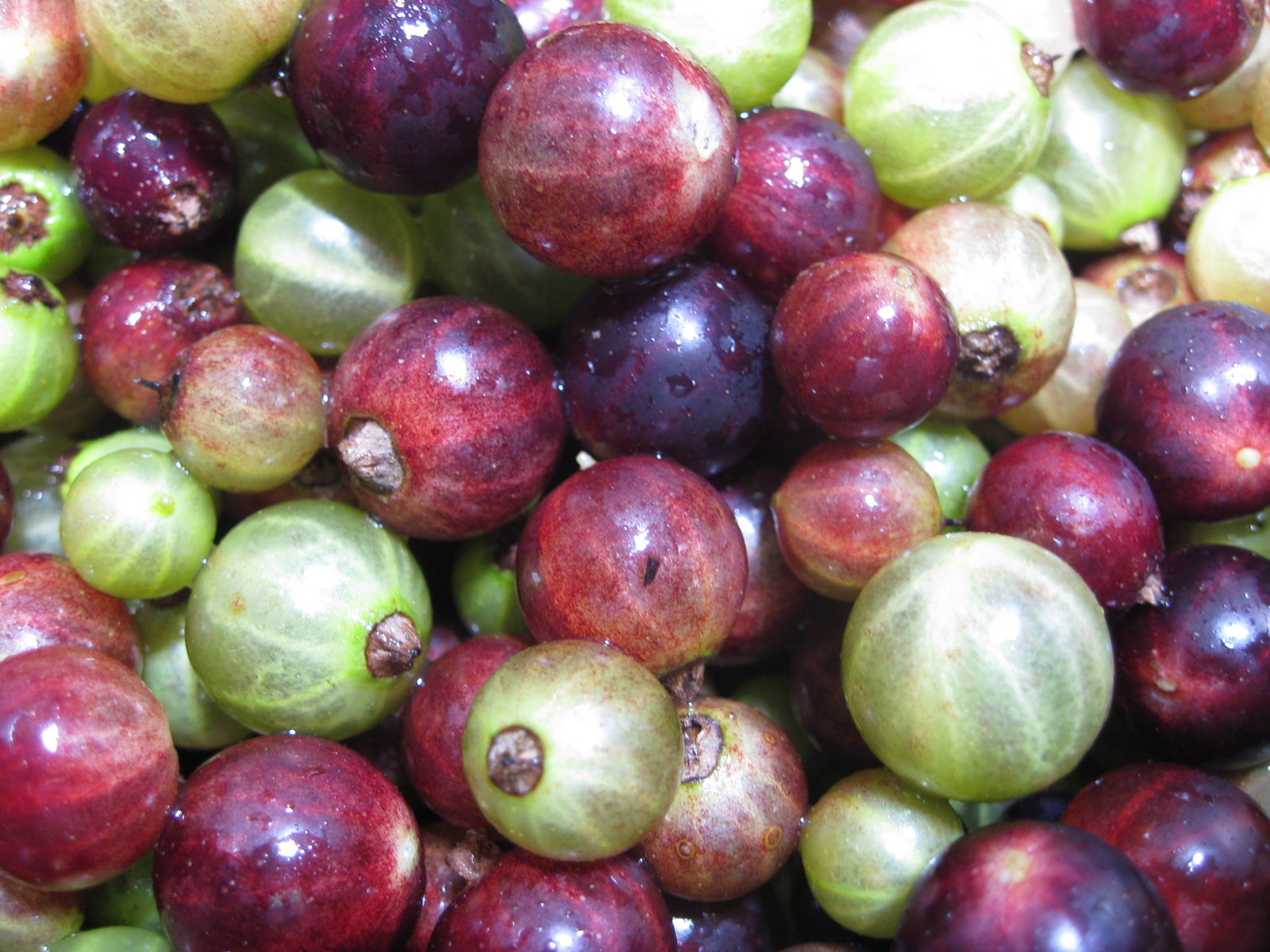
Harvesting began in June with a lovely supply of currants and strawberries. I made the currants into jam and sauce. Some of the strawberries became jam and others were frozen. In July we harvested cherries from three cherry trees. We made a few pies and have several bags of cherries in the freezer.


The summer raspberries produced nicely, too, some of which became jam, some frozen, and plenty of them enjoyed fresh. The blueberry bushes are coming along, and we were able to freeze a few for winter use. Our peach tree did very well---90 pounds of peaches! My freezer and canning shelves are full---jam, peach rum sauce, spiced honey peaches, peaches in light honey syrup, and plain frozen peach slices (for pie later on).

In July we harvested honey from our one surviving hive. We made mead and strawberry melomel (a fruity mead variation). Honey is shelf stable and will last the winter.


Vegetables in raised beds have also done well. I harvested 50 pounds of potatoes and 50 pounds of onions in early August, and immediately replanted those beds with spinach, arugula, Swiss chard and beets. We'll hoop those beds to stretch the growing season through November. The butternut squash have exceeded 60 pounds, and there are still more growing on the vines.

This year the tomatoes have outdone themselves. I grow only six Amish paste tomato plants and I have enough tomato products to keep us until next year----plain tomato sauce, pizza sauce, tomato paste, and two kinds of salsa. I'm not kidding---only six tomato plants and they're still producing. Green beans continue to produce into the fall. We have dilled beans and frozen beans to last the winter.

What have I forgotten? Lots of basil/pesto, herbs, carrots, beets, scallions, and garlic. Fall bearing raspberries are awesome!

You can do it, too. If there is a secret to successful gardening, it's not a very well-kept secret: sunshine and compost. Start planning for next year's garden!

Monday, July 8, 2013

Canning vs. Freezing

It rained a record-setting eleven inches in the month of June at Red Bucket Farm, which seems to have pleased our fruit bearing plants, bushes and trees. In the last few weeks, we've harvested many pounds of strawberries, rhubarb, currants and cherries. The raspberries, blueberries and tomatoes are just beginning to ripen, which will be followed by peaches and more vegetables.

What do we do with all the harvest? Our free-standing freezer is modest in size, so we follow the advice of our friend Lynn who says, "Can what you can and freeze what you can't." So far we have canned strawberry jam, apricot jam, rhubarb-currant jam, and currant sauce (for pancakes, ice cream, etc).  We've frozen sour pie cherries, sliced strawberries and strawberry puree (for smoothies).

It concerns me that home canning has a reputation of being difficult and arduous. The whole process is rather simple. The main concept is to pour piping hot food into boiling hot jars, tighten the lids and simmer them for a few minutes. As they cool, the lid seals with a pop. That's it. The equipment is affordable and readily available---a few canning jars and lids, a large soup pot for cooking the food, one large canning pot for boiling the jars. A few tools are helpful, like a canning funnel, a jar lifter, a ladle. Keep it simple.


Let's take today as an example. I picked black currants this morning, separated them from their tiny vines and stems, and washed them. (Then I took a break.) After that I placed clean jelly jars inside the canning pot, filled it with water and started it on my high capacity burner. The currants went into the soup pot along with some sugar, while the new canning lids went into a sauce pan with water to simmer. My goal was to have the currants cooked down at about the same time the jars came to a boil. I lifted each jar out of the boiling water bath one at a time, filled with jam using the funnel and ladle, wiped the rim clean of any drips, added the lid and the canning jar ring, and lowered it back into the boiling water bath. When all the jam was in the jars, I cranked the heat back up to high and boiled for ten minutes. Then I turned off the heat, raised the lid and waited five more minutes. I lifted the jars out of the water bath onto a towel and listened to the lids pop as they sealed.

The process may seem complicated at first, but soon it becomes easy. I can make a batch of jam in a hour. It's the picking and cleaning the fruit that takes a long time. Visit www.freshpreserving.com for more details, or check out a canning book from the library. Try to avoid the high drama of 1950s home economics tutorials. This isn't rocket science. Just follow any recipe for guidance as to how much sugar to add, and whether or not you'll need lemon juice for acidity or pectin for thickening. The instruction sheet inside a box of powdered pectin is probably sufficient to get anyone making jam.

Freezing is even more simple than canning. Place clean fruit (such as cherries, raspberries, blueberries) in a single layer on a cookie sheet and pop it in the freezer. After a few hours, transfer the fruit to freezer bags or containers. Sliced strawberries and peaches can be placed directly into the freezer container. Make sure containers are tightly shut to avoid freezer burn. It is possible to use glass canning jars in the freezer (rather than plastic), but be sure to leave an extra inch of expansion space at the top of the jar.

Now, get out there and enjoy the fruit of the season!

Monday, May 20, 2013

Aphid Invasion


Aphids are tiny pale green insects that suck the life out of plants. They tend to congregate on the undersides of leaves, especially on tender new shoots at the ends of branches. I'm not sure that an aphid invasion will completely kill a plant, but they can weaken and damage in the spring as the plant is producing new growth. Look for curled leaf edges and light veining on the surface of the leaves.


This spring the aphids are working their magic on my currants and gooseberries. They aren't terribly picky about their host plant, so keep a close eye on herbs, young trees and bushes, and other tender shoots. Since I have a particular love of currant jam, I'm willing to do battle with the little buggers. Treating aphids isn't difficult, but requires determination and perseverance. I'm spraying them with Safer Insecticide Soap, but dish soap works too. I spray by hand, carefully turning over leaves and spraying the underside of the leaf as well as its stem. Eventually, the heat of the summer will discourage this pest.

In spite of the aphids, my currant and gooseberry bushes are robust and setting fruit. I just finished my last jar of 2012 currant jam, so I'm looking forward to harvesting this year's crop in about five or six weeks---in spite of the little buggers.