Welcome

Red Bucket Farm is an urban farm on a quarter acre property in an average residential neighborhood. We are located in Wisconsin, USDA Zone 5. We focus on chickens, bees, orchard fruit, and raised garden beds for fruits and veggies. We hope to reduce our footprint on the planet by growing some of our food, reducing our use of fossil fuels, and gardening with sustainable practices. Thanks for visiting!

Showing posts with label eggs. Show all posts

Saturday, August 2, 2014

Marilyn's First Egg


Marilyn laid her first egg today! She's been preparing for this big moment for a few weeks. Yesterday morning she snuggled in a nest box for a good thirty minutes--she was practicing--and for the last couple of weeks she's been hanging out in the hen house watching the older girls carefully as they lay. This morning Marilyn was mighty bossy to the other pullets, and I could tell she was feeling all grown up and important.


Marilyn is a Silver-Laced Wyandotte. We named her after actress Marilyn Monroe because a Wyandotte is a full-bodied and curvaceous hen, and the silver lacing on her plumage makes her an awfully glamorous addition to the chicken yard. Marilyn was hatched on March 10, 2014. The previous Wyandotte on Red Bucket Farm took a full seven months to lay her first egg, so Marilyn is ahead of schedule.


This morning's egg is tiny--less than two inches long--with a perfectly smooth and shiny tan-colored shell. Subsequent eggs will grow in size. Marilyn has finished bragging and strutting. She's settled in the dirt for a quiet afternoon in the shade. Well done, Marilyn!

Wednesday, March 12, 2014

Introducing Spring Chicks

We picked up our chicks at Abendroth's Hatchery on Monday morning. The hatchery was clean, friendly and well organized. Our girls were carefully packaged and ready to go when we arrived.

In previous years, we've gotten our chicks delivered by US Postal, so the "day old" chicks were really three days old upon arrival. Now that we've experienced true day-old chicks, we can clearly see a difference in size. What a difference a day makes in the life of something so small and fragile!

And now, without further ado, here they are:


This is Little Mittens, an Easter Egger. She will grow golden brown plumage and lay green eggs. Her name is a long-standing family joke. We haven't allowed Kavi to name any of the animals around here until today....for obvious reasons. He says he's going to get a mastiff or an Angus bull and name it Little Mittens, which he pronounces Wittle Mittens in a very high voice.


Pictured above is Queen Latifah, a Black Australorp. She will grow into a beautiful bird with shiny, soft black feathers, black legs and black beak. Right now she has a little white diaper butt. She will lay light brown eggs.


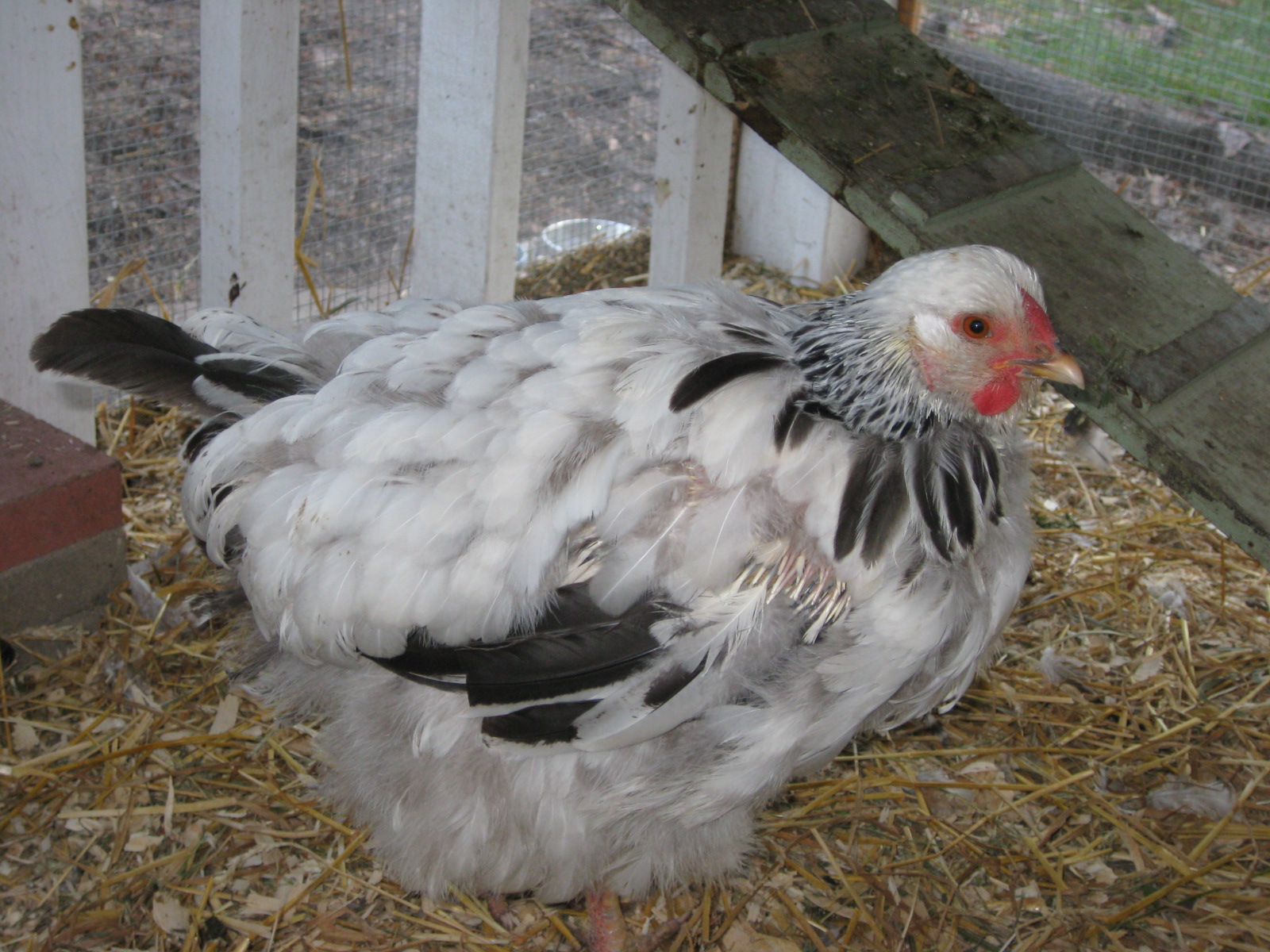
This one is Marilyn, a Silver Laced Wyandotte. She'll grow silvery white plumage with black edges outlining most of her feathers. We expect her to be the glamour girl of the flock, with her curvy body shape and fancy dress. She'll lay light brown eggs.


These three are Ping, Pang and Pong. They are White Plymouth Rock, an excellent dual purpose breed. Their names come from Puccini's opera Turandot. Yeah, you knew I couldn't stay out of the naming process entirely. But I tried!

Thursday, February 27, 2014

Ordering Chicks: Which Breeds?

So you'd like to order a few backyard chicks and you don't know where to start? First, decide why you want to raise chickens. Do you want to raise eggs, meat or both? Are you interested in showing chickens competitively? Do you want full sized hens or the smaller bantams?


Here at Red Bucket Farm, we've concentrated on winter-hardy egg laying hens. We always have one or two hybrids---Red Star or Golden Comet---bred for excellent laying capabilities. These girls keep us in eggs all winter long. We also have a few dual purpose hens. These birds lay well but also dress out nicely for the table, hence their dual purpose. We've had Delaware and Dominique, both heritage breeds, as well as Plymouth Rocks (Barred and Partridge--these are color variations), Wyandotte, Rhode Island Red, Buff Orpington, and Speckled Sussex. We also have had an unusual Delaware-Buckeye hybrid that produce eggs like crazy! Later in life, our dual purpose birds arrive at their other purpose: soup.


We've never raised meat birds (Cornish X) because they are bred to be grossly breast-heavy, aggressive feeders that require exclusive quarters. They grow quickly and are butchered in 12-16 weeks. They don't get along well with dual purpose birds and can't be raised together.


When researching breeds, don't forget to consider winter hardiness and temperament. Some birds are happier in confinement than others. Certain breeds are more gentle or aggressive than others. Eventually, you make a decision and get started.

I've ordered my chicks and I'm excited to start my new babies. I included another Easter Egger for green eggs. We're trying a new (to us) breed, the popular Black Australorp. And we're going for a Silver Laced Wyandotte so that our farm has a new glamour girl. Finally, we're raising a few extra dual purpose White Plymouth Rocks for meat. This is a new effort for us because purchasing organic chicken is so expensive.

The new chicks will arrive in a week or so. Stay tuned for updates and get your order in soon!  

Wednesday, February 12, 2014

Green Egg


Cassie the Easter Egger has finally started laying eggs again! Her last egg was Dec. 21, nearly eight weeks ago. It's normal for molting hens to stop laying in the winter, but Cassie is a pullet and didn't molt. It's also normal for hens to lay fewer eggs during the dark months. Cassie has been a bit disappointing, eating a lot and providing little in return. She's back in production now, which will keep her from the soup kettle for a while. Her green eggs are far more beautiful than my limited photography skills can demonstrate. Welcome back, Cassie!

Tuesday, February 11, 2014

Frozen Eggs


I gathered three eggs from the hen house around 9 am this morning. One was warm and lovely; another was frozen solid with small cracks in the shell; the third was frozen and pecked open (photo above). I suspect the girls laid eggs so early this morning that they were frozen by the time I retrieved them. We are so very tired of sub-zero temperatures. (Beta-dog gets to eat the broken egg.)

Friday, February 7, 2014

Increased Egg Production


What's wrong with this picture? Nothing, I suppose. Egg production from my backyard flock is way up. I should hardly be concerned!

The numbers bottomed out - predictably - the week of the winter solstice. (Remember that egg production is dependent upon light, not necessarily temperature.) That week we gathered only 11 eggs from the girls. With the increase in natural daylight and a little supplemental lighting in the early morning, egg production is currently up to about 23 eggs per week.

Thelma and Louise (our Buckeye-Delaware hybrids) began molting around Thanksgiving. The poor things looked quite miserable for a month or so. It takes all their energy to grow new feathers and they ceased laying eggs entirely for about eight weeks. Happily, they are both back into production now.

So what's wrong with the picture? My silly Easter Egger, Cassie, hasn't laid an egg since Dec. 21. She's not molting or sick, just unproductive. It's not uncommon for egg laying to slow or stop in the winter, but she's less than a year old and should be doing something other than eat, sleep and poop. All that expensive organic chicken food needs to translate into organic eggs. This is an urban farm, not a zoo. Tick-tock, Cassie.

Tuesday, January 21, 2014

Cold Eggs


Of course you know that egg production is dependent mostly on daylight. As the days grow shorter at the winter solstice, egg production naturally decreases. When you factor in the autumn molting cycle of mature hens (and they don't lay eggs when they're molting), late December and early January are the slowest time of year for eggs. Remember, this has rather little to do with the cold temperatures.

The week of the solstice we were down to 11 eggs, so we actually had to purchase a dozen from the grocery store. A week ago we began supplemental lighting in the coop, adding a few compact florescent bulbs on a timer from 4 am to 8 am. This morning I gathered the three eggs you see above. The two molting hens seem to have recovered and look fully feathered. They should begin laying again soon. So we're on the upswing---spring is really coming!

By the way, this morning it's -2 degrees Fahrenheit in the coop, but the ceramic heaters in the hen house are holding it at a balmy +8 degrees. We purchased larger wattage heat emitters, but we're reluctant to make a big difference between the hen house and the real world. Stay tuned!

Monday, September 30, 2013

Pullets First Eggs

Some hens begin their egg-laying career with little fanfare, while other hens require extra encouragement. Generally speaking, I do not fuss over my hens a great deal. It's true they have fabulous living quarters and excellent organic, locally-milled food, but I do not hug them, or hold them on my lap, nor do I sing to them, or read them poetry or write poetry about them (although I love the folks who do all those things). My girls are members of the urban farm team, and when their time is up, it's good that I'm not too attached to them emotionally. 


Andromeda (the Barred Rock pictured above) arrived at maturity and began laying a few weeks ago with nothing more than a happy little crow. It's easy to see when a pullet is ready to begin laying eggs. She'll begin hanging around the nest boxes, quietly watching the older girls. Andromeda prefers to be left alone to accomplish her morning ritual, dutifully giving us one medium-sized light brown egg. She minds her own business and rarely calls any attention to herself.

 
Evidently, not all the girls understand the working rules around here. Cassie (the Easter Egger in the photo above) has been like Velcro for the last couple weeks. She's always underfoot, rubbing against my ankles as if she's a kitten. She crouches down and waits for me to stroke her or pick her up. She jumps into the hen house to help me clean. She talks to me constantly, the happy clucking of a contented bird. Even when I'm picking beans outside the chicken yard, Cassie is right at the gate, chattering away some fantastic story. I knew she was getting ready to lay her first egg, and the blessed moment finally arrived over the weekend. There was a fair amount of squawking and drama, including a few hours in the nest boxes while she worked out the timing.


Until a few years ago, I never imagined that chickens have such unique personalities, every bit as distinct as their lovely eggs. We still have one more pullet to arrive at egg-laying maturity this fall. Since she's already a loud talker, I expect there's more drama to come.....

Sunday, August 4, 2013

Ruby's First Eggs


Ruby has just begun laying her first eggs! She is a hybrid known sometimes as Red Star, Comet, or Golden Buff. The females are veritable egg machines, laying well in hot and cold weather. Our former Red Star was Rosie, who laid more than 600 eggs. That's quite an act to follow, but Ruby has begun laying at 16 weeks of age, precisely the same age that Rosie was when she began laying. So far, Ruby's eggs are undersized---slightly smaller than a golf ball---but we expect they will soon be larger.


It's comical to watch the spring chicks arrive at maturity. Last week the young pullets were all in the hen house watching one of the older hens lay an egg in the nest box. They were quiet and respectful. I wondered if there was some kind of tutorial experience happening in there.


Ruby's eggs are a welcome addition to the kitchen. We harvested our older hens a few weeks ago and egg production has been down. The other spring chicks will begin laying in the next few weeks.

Monday, June 17, 2013

Irregular Eggs


I went out to gather eggs this noon and look what I found! The green egg is from Crocus the Easter Egger; the tan egg is from Squill the Speckled Sussex; and the large brown egg is from Thelma the Delaware-Buckeye hybrid. But who in the world laid the tiny egg? It's about the size of a walnut. I might think it came from a bantam hen, except that I don't have bantams. The dark brown shell is the same as Thelma's eggs. Can she have laid an egg-and-a-half today? Is that even possible? She's been working hard lately, clearly making up for my older hens who lay only twice a week. Strange....

Monday, June 3, 2013

Coop Tour Fun

On Saturday, we volunteered as one of a dozen host sites for the Mad City Chicken Coop Tour. Visitors began arriving just after 9 am and continued in a steady stream all morning. Although the tour was scheduled to end at 1 pm, we chatted with guests until 2:00.


We met so many wonderful chicken enthusiasts, all of them curious and ready to learn. We shared our chicken-keeping philosophy---why we chose a walk-in style coop and elevated hen house, and the importance of hardware cloth over chicken wire. We talked about chicken breeds, egg color, heated water dishes, supplemental lighting, insulation, ventilation, winter protection, hawks and owls and coyotes. Oh, my! Many of our guests also asked about our top bar beehives, raised garden beds, hops towers, hillside terraces, home orchard and greenhouse.


In return, visitors were happy to share their own expertise with us. We learned that lemon balm is just as invasive as mint. One person shared a recipe for making skin balm from beeswax, almond oil and essential oil. Another new friend offered to share a bit of SCOBY (symbiotic colony of bacteria and yeast) or "mother culture" for making kombucha.

We estimate that our visitors numbered between 60 and 70. A few guests came from the neighborhood, others from across Madison, Middleton, McFarland, Stoughton, Columbus, Walworth County, Milwaukee and even northern Illinois. Several folks expressed frustration at their restrictive local ordinances.


The only problem with volunteering as a host is that we didn't get to visit other coops. We managed a quick after-hours peek at one other host site where we discovered a wonderful and creative adaptive reuse of a child's play house.

It was a fabulous (and exhausting) day. The weather was beautiful, the chickens showed well, and the people were supportive and fun. If you haven't experienced a coop tour, give it a try!

Wednesday, April 10, 2013

Spring Chicks

Our shipment of spring chicks arrived at Red Bucket Farm this morning via USPS. These girls hatched late Monday or early Tuesday, and were shipped out Tuesday morning. Allow me to introduce the new babies:


This is Venus. She is a Buff Orpington. This breed grows to be rather large, fluffy and almost butterscotch in color. They have a reputation for friendliness and gentleness. Venus will be a good (not great) layer of brown eggs, and she'll be excellent for keeping her friends warm through the cold winter months. She was a last-minute substitution, because the Black Australorp that we ordered didn't hatch on time for shipment. This breed is popular among backyard chicken enthusiasts.


Above you see Andromeda, a Barred Plymouth Rock. She refused to pose for the camera. Andromeda will grow to have white and black stripes and a large red comb. She'll be winter hardy and a good egg layer of brown eggs. She is our second Barred Rock.


This is Ursa, a hybrid egg layer sometimes known as Red Star or Golden Comet. Ursa has two faintly brown stripes down her back and will grow to be a basic red-brown color. This breed lays eggs with amazing regularity. Our last Red Star (Rosie) gave us more than 600 eggs in her lifetime, so the pressure is on for Ursa to perform as well.


What backyard flock is complete without an Easter Egger? This is Cassiopeia. She will begin laying green (or more rarely, blue) eggs in September. Feather colors vary for this breed, so we'll wait to see what she looks like as an adult. Easter Egger chicks have a broad stripe down the back, which makes them look a vaguely chipmunk-y.

Just a note to apologize for the lousy photography in this post. Chicks do not pose. They don't slow down. They poop on everything. So this is as good as it gets for now. More later!

Saturday, February 23, 2013

Egg Production Increase


At long last, all our hens are back in production! Crocus the Easter Egger laid a beautiful green egg this morning, her first egg since October 26. Her molt took a looong time and she's very well rested. Daisy the Delaware lays a shiny medium brown egg nearly every day, and Squill the Speckled Sussex lays a perfect tan egg several times a week. The Buckeye-Delaware hybrids lay dark brown eggs just like clockwork. Since beginning artificial lighting in mid-January, our egg production has increased from zero eggs per week to two dozen eggs per week. The hens are more active, look healthy and talk happily when we step outside. Remember, folks, it's not the snow that effects egg production, it's all about light.

Thursday, February 7, 2013

Return of the Eggs


The hens at Red Bucket Farm are laying eggs once again! After a long winter rest, the girls are back to work. Supplemental lighting has been very helpful and we will make this a regular part of our flock maintenance.

Daisy the Delaware began laying last weekend and is producing daily. She was quickly joined by Squill the Speckled Sussex. Now the Buckeye-Delaware hybrid pullets are getting into the action, too. Our Easter Egger is still finishing her molt, so her green eggs will be delayed until she is ready.

The flock is noisier and more active than they have been in months. It's still snowing outside, but spring is on the way and the chickens love the increase in day light, both supplemental and natural.

To celebrate the resurgence in egg production, tonight's menu includes tortilla espanola, a Mediterranean potato and egg omelette. Hooray for backyard hens!

Tuesday, January 29, 2013

Lighting the Coop


We began lighting our chicken coop a week ago. We installed compact fluorescent bulbs in the rafters above the covered run and the hen house. The lights shine through the hardware cloth ceiling to the run below. With this arrangement there is very little chance that the coop will catch fire.

Coop fires happen too frequently. Many farmers use wood shavings, hay and straw as bedding materials, which will make any coop a tinder box. It's important to be very cautious when lighting or heating a chicken coop.


Our lights are set on a timer to turn on at 4 am and off at 7 am. This extends the day for the hens to about 13 hours of light, which is roughly the equivalent of daylight in April. We hope this is enough light to stimulate egg production. We chose to not extend the light in the evenings because this confuses the birds regarding bedtime. If the lights shut off suddenly at 9 pm, it will be too dark for the girls find their way to the roost. 

We'll stop using the lights as the spring progresses. We plan to resume lighting later in the year, but not until after the girls have a chance to molt. If we begin lighting too early in the fall, it may cause the hens to delay their molt until mid-winter when it is dangerously cold weather. Instead, we'll allow the girls to have a natural rest in the fall, and begin lighting again after the winter solstice. 

The new schedule has been working reasonably well. The girls are up early in the morning, scratching and feeding in their coop. But the last week has been a strange transition for them. They've gone to bed at 4 pm in spite of the continuing day light. I think they're tired out with the sudden extension of their day. Perhaps they need their beauty sleep! 

Still....no eggs yet. 

Tuesday, January 1, 2013

Unproductive Hens


I'll admit that I'm pretty frustrated with my backyard flock of hens. We haven't gathered an egg from these girls since November 3---a full two months without fresh eggs. Ours is a fairly common predicament. We have a couple of pullets who haven't arrived at maturity and aren't yet laying, and we have a few older hens who are stuck in the annual molt.

A chicken's annual molt, which occurs in the fall, lasts anywhere from a month to three or even four months depending on the age of the hen. The older a hen gets, the more stressful and time-consuming it becomes for her to shed old feathers and grow new ones. 

A spring chick will grow over the summer and begin laying eggs in the fall. She might experience a light molt her first fall, which will reduce her egg production but probably not halt egg laying entirely. She's likely to produce eggs her first winter and lay abundantly through spring and summer. But her second autumn will induce a more dramatic molt, and she is likely to stop producing eggs completely while her body works on growing new feathers. After the molt she'll start to produce eggs again, but her eggs will be larger and fewer than previously. As each year passes, her molt will become increasingly severe and her eggs less abundant.

As an urban farmer with a limit to flock size, how long do I continue to feed unproductive hens? Although the girls are obviously healthy and normal, when is it okay to cull the flock and raise new chicks? How can I justify the expense of chicken feed without any eggs?

Wednesday, November 28, 2012

Chickens Mid-molt


Several people have inquired, so here is a quick update on my molting hens. The girls are doing okay, or at least they're not completely miserable. It is normal for them to molt at this time of year. It doesn't make much sense to me, as the nights are quite cold and I wish they were all fully feathered, but this is considered normal. Egg production began tapering off quickly in October. I haven't retrieved an egg since November 3. The same three hens that formerly gave 15-20 eggs per week are now on hiatus while their feathers grow in. It takes all their energy to accomplish this. In the photo above, you can see tiny quills poking through Crocus's head and neck. They resemble white needles against her darker feathers.


Daisy's tail feathers are growing in now and I think she is approaching the end of her molt. Each hen begins and ends the molt at her own pace. Squill, who preferred to not be photographed today, still has bare skin patches on her neck and shoulders.


Meanwhile, we've winterized the coop by covering it with sheet plastic and plexiglass. The girls have plenty of space to stay out of the wind and precipitation, yet they have the freedom to wander outside when it's sunny and warm. They have open water in their heated water dish, and we've increased their protein intake with sunflower seeds as treats.

We're hoping for eggs again after the holidays. Meanwhile, we try to keep the girls clean, dry and well-fed. This is Mother Nature's way of giving the hens a vacation from many months of hard work. And this year I gave them holiday lights on their fence to keep them cheerful.

Wednesday, October 3, 2012

Culling the Flock


As an urban farmer, the size of my chicken flock is regulated by city ordinance. Most cities with chicken ordinances permit three or four hens per yard, although I'm hoping that number will increase as neighbors understand the benefit of chickens and realize that birds are much quieter than many dogs. But I digress...

Most backyard chicken enthusiasts raise hens for egg production, although some folks keep them just for fun. Here at Red Bucket Farm, our girls are a hard-working component, providing healthy eggs for the kitchen and plenty of waste for composting. Because of flock size restrictions, we're not able to retain the birds who don't produce.


The recent addition of Thelma and Louise, our new Delaware-Buckeye hybrid pullets, forced us to cull the flock. Culling is the process of removing sick, injured or inferior birds. Rhoda, our Rhode Island Red, has been largely unproductive for many months. In addition, Rhoda is mean. She's been a bully for as long as I can remember.

It's difficult to think about where our meat comes from. As a culture, Americans have become so removed from the source of our food that many of us barely recognize that an animal died in order for us to consume meat. I think that anybody who chooses to eat meat should know the source of their dinner---how the animal lived and how it died. We can't assume that a meat animal's life is handled humanely.

Even egg-laying chickens struggle for a decent life. A commercial egg farm in southern Wisconsin routinely gasses thousands of birds after about a year of egg-laying and disposes of the carcasses in a nearby landfill. In cultures where people live closer to the land and their food sources, it is important to honor an animal's life by using all of it's parts in death.


Rhoda died quickly and without distress. We'll enjoy coq au vin tonight and cook down the remains for soup. She lived a good life right to the end.

Tuesday, October 2, 2012

New Pullets


Welcome, Thelma and Louise! These two girls are a Delaware-Buckeye hybrid, recently acquired from an area farmer. I love their bright yellow legs! They have rather small combs ("pea comb") that may develop a bit more as they reach maturity. Their tails are still a little stumpy but are likely to fill out. Since the girls are only about three months old, we'll wait a little bit before they begin to lay eggs.

The Delaware breed is designated as a heritage breed. The birds are white, winter hardy and lay large brown eggs. The Buckeye breed was developed in Ohio from a Rhode Island Red. The Stoughton-area farmer who bred Thelma and Louise is hoping for very hardy birds that lays plenty of rich, brown eggs.

Incorporating pullets into an established flock is a little tricky. The older birds don't exactly roll out the red carpet. Thelma and Louise are keeping a low profile, sometimes perching on elevated roosting spots that the big girls can't quite access. It can be a bit of a circus, and Louise (with the pink leg band above) tends toward the dramatic.

Stay tuned for more updates on the transition in our small flock.

Wednesday, August 29, 2012

Food Snobs


It's time for me to recognize that my girls are food snobs. Oh sure, they love the treats we give them---bread, pasta, rice, melon rinds, and those scrumptious smushed Japanese beetles that we pick off the raspberry plants. But just this week they've proven themselves to be as fussy and lazy as spoiled cats. 

When we first began raising chickens, our poultry consultant recommended that we feed them food from a reputable company such as Purina. He discouraged us from buying the bags of cheap feed at the farm store. Like dog and cat food, poultry feed comes in a few different formulas for different stages of life. There's chick feed, of course, followed by different blends for egg layers or for birds raised as meat production. Our first girls started out with Purina chick grower and then moved on to Purina Layena. 


After a while, I became aware of genetically modified crops, and I realized that Purina very likely uses corn that has been genetically modified. We switched to organic hen food, alternating between two brands. We tried Organic Pride (from Mounds) and the Willy Street Coop's own soy-free organic blend. In the end, we decided that Organic Pride had less waste at the bottom of the bin and the girls seemed to prefer it. 

Just in the last month, egg production has been down significantly. Two of my girls have given me an egg or two per week, which is pretty poor. I know they lay fewer eggs in extreme heat, but this month has been pleasant. We decided to change their food to see if that would make any difference. 


Early this week, we scooped the Purina feed into their food dishes and watched them run frantically from one dish to the other. All four hens eyed us wildly, certain there was some kind of horrible mistake. They returned to the hanging food hopper, the only dish with a bit of organic feed remaining. Then they sulked in a corner and refused to eat until their evening ration of Japanese beetles. 

So. That's the way it's going to be? We returned to organic feed and the girls dramatically swooped in to fill their little crops. I'll give the Purina to a neighboring chicken farmer. But the cleaver and soup pot await those who do not lay eggs. Nope, I'm not kidding. We're limited to four hens and they're not simply pets. I hope they're paying attention to my daily pep talks!