Welcome

Red Bucket Farm is an urban farm on a quarter acre property in an average residential neighborhood. We are located in Wisconsin, USDA Zone 5. We focus on chickens, bees, orchard fruit, and raised garden beds for fruits and veggies. We hope to reduce our footprint on the planet by growing some of our food, reducing our use of fossil fuels, and gardening with sustainable practices. Thanks for visiting!

Showing posts with label orchard. Show all posts

Wednesday, July 27, 2016

Squirrels v. Orchard

Ach du Lieber! The squirrels have invaded our orchard, causing more destruction than any previous year. We're attributing it to a lack of natural predators. Where are the hawks and foxes when we need them?


Our "Reliance" peach tree tends to produce ripe fruit in mid to late July. The squirrels aren't wasting any time taking three bites out of every peach and then dropping them to the ground. In self defense, we have picked nearly every piece of fruit off that tree. The peaches are currently on the large shelves of our plant stand, where they can continue to ripen indoors for a week or two before canning and freezing. Our other peach tree, "Contender" variety, will produce ripe fruit in a month. So far, the squirrels are allowing that fruit to grow.


Similarly, our "Colette" variety pear tree is very attractive to squirrels and so we've harvested that fruit as well. Orchard expert and author Michael Phillips recommends refrigerating pears for a few weeks, and then bringing them out slowly to ripen before use. The brew master at my house says we'll be juicing some of the pears for making perry (a fermented adult beverage using half pear juice and half apple juice).

Sunday, June 5, 2016

Spring Fruit

A photo survey of the orchard this morning reveals several kinds of baby fruits. Can you name them?


Photos from top to bottom: cherries, crabapples, peach, apricot, pear, currants, kiwi. How did you do?

Wednesday, April 13, 2016

Mason Bees


We put the Mason Bees outdoors this morning. They have been in storage in the refrigerator for the winter, where they remain dormant but protected from sub-zero temperatures. (I have other strange things in my fridge, too---acorns, dormant onion plants and seed potatoes. Also hops and yeast, but we consider that quite normal.)

We expect the bees to be active in a few days. They will emerge from their cocoons and immediately begin pollinating. We try to time their emergence with the blooming of early fruit trees like apricot and crab apples. A few of our trees are almost at bloom stage, and the weather looks very promising this weekend.

Mason bees are solitary creatures that operate independently. There is no hive or honey, and they do not sting. They pollinate very efficiently, much more effectively than honey bees. They look a bit like a house fly. The females lay a single egg inside a straw-like tube, pack it with a bit of food and seal it with mud. She continues to alternate additional eggs and mud until she fills the tube.

We have several blocks of nesting tubes that we can rotate for cleaning purposes. I would caution against purchasing mason bees houses that look like tubes of bamboo bundled together. How does one clean those things?

At Red Bucket Farm, we have two Mason bees houses like the one pictured above. Both houses face east to catch the warmth of morning sunshine. The houses are sheltered from rain by the wide eaves of our house. They are situated close to our orchard trees so they don't have to travel far to accomplish their job.

Sadly, we lost all our honey bees over the winter, but that's a different post. See you outdoors!

Thursday, October 30, 2014

Drying Herbs

As the growing season slowly comes to an end, I'm experimenting with drying herbs for cooking use as well as for my chickens.


A farm colleague has suggested that using dried herbs in the hen house over the winter will help discourage mites or creepy crawlies and will certainly help the fragrance in that crowded space. For that goal, I've been harvesting the herbs that are underplanted in my front yard orchard--oregano, lemon balm and lavender. It's important to keep these herbs separate from those designated for human consumption because the front yard is subject to every dog in the neighborhood. 'Nuff said?

Other herbs at the farm have been living comfortably in the green house--basil, sage, rosemary, and chives. These I can dry and crush, then store in jars in the kitchen.


The process of drying herbs is simple. I cut the stems into a size that will fit in my large roasting pan and place it in a cool oven at 140 degrees Fahrenheit with the fan running. (I have a convection oven.) I prop the oven door open an inch or so to allow moisture to escape, checking on them periodically. The timing will vary depending on the herb and quantity being processed. When it all seems a bit crunchy, I take it out of the oven and gently pull the leaves off the stems. Then I crush it with my hands and place it in storage containers. The herbs for use in the hen house are stored in large plastic bags in the freezer.

Drying herbs in the oven makes my house smell fantastic. It's quicker than the traditional method of hanging bunches of herbs in the basement or garage, which (for me) usually results in messy bits of dropped leaves and stems. Give this a try!

Sunday, June 29, 2014

Picking Cherries


We've reached the point at Red Bucket Farm where we are much too busy---sowing, weeding, watering, fertilizing (chicken poop tea!), harvesting, cleaning, processing, tending the chickens and bees---to have time to write a blog post. But there is a bit of photographic evidence that the orchard ladder is useful and well worth the cost.  Our three tart cherry trees suffered no losses over the cold winter.

Thursday, May 29, 2014

Managing the Orchard

Anyone who has gardened for more than a year or two knows that the garden is never finished. Most great gardens are in a constant state of transition as the gardener discovers which plants flourish in any specific location and which do not. This is also true at our fruit orchard here at Red Bucket Farm.


Last year, our large peach tree produced ninety pounds of juicy sweet fruit. We're still eating from that harvest! But the winter of 2013-14 was cold and colder, and the peach tree has barely survived. This tree is located at the bottom of the hill in a micro-climate that didn't fare as well as the trees up the hill. It didn't bloom this spring at all, and we're nursing it with chicken poop tea and hoping that it will recover this summer to produce again in 2015.


On the other hand, our three cherry trees bloomed beautifully and are developing little fruits. Hooray for winter-hardy pie cherries!


The new trees in the front yard orchard are doing well, or most of them are. Two peach trees, three pear trees and one apricot tree all bloomed lightly and are making a few small fruits---not bad considering these are still very small trees. One additional apricot tree (important for cross pollination) is struggling. This is the second tree of that variety we've planted in that location and it's just not happy. We suspect that the roots are too wet and the soil isn't draining well. We've removed the tree to a container for recuperation, and we've ordered a different apricot variety to plant in its place. We'll create a mounded hill to help with drainage and we'll amend the soil with Turface and chicken grit.

Every evening we wander through the orchard and check on our trees. Slowly we're discovering which trees belong in each location. A fruit tree gives a lot of bang for your buck, so it pays to be attentive and invest in the home orchard.

Thursday, July 25, 2013

Underplanting the Orchard


In his book The Holistic Orchard, fruit tree expert Michael Phillips offers recommendations for the overall health and productivity of fruit trees. Based on his concepts, we spent several hours over the weekend underplanting our home orchard. We removed the grass beneath each tree and added hardwood mulch to allow more nutrients and water to reach the roots of the trees. 

Phillips recommends planting a "living mulch," an understory of widely diversified plants, some that attract beneficial insects, others than repel destructive insects. We have plenty to learn in this area, but diversity seems to be the operative concept. 


Comfrey (above), known for its medicinal qualities, has a long tap root that pulls up nutrients from deep below ground and distributes them to tree roots. We planted oregano and lemon balm for their bee-friendly qualities. Chives are reported to help with peach leaf curl, so we planted that beneath the peach trees. Bitter herbs are thought to repel fruit pests, so we'll work on that next spring. 

Of all the crazy projects we've done around here, this one has garnered most comments from the neighbors because in addition to having function, underplanting is also quite attractive. 

Monday, June 24, 2013

Orchard Ladder


This spring we invested in an orchard ladder. It was a safety measure---too often I have watched my husband teetering a the top of an eight foot step ladder with bricks or 2x4 lumber tucked precariously beneath one or two ladder legs in an effort to balance the thing. These were situations in which I would dial 9-1- and wait for disaster. Fortunately it never occurred, but when we discovered orchard ladders, this purchase quickly became a priority.

An orchard ladder is a tripod. The ladder side is wide at the bottom and narrows gradually to the top. The third leg hinges widely---perfect for working on a slope or hillside, and ideal for getting right into the middle of fruit trees without causing branch or fruit damage. (This week we're picking sour pie cherries and thinning peaches.) The ladder is also useful for managing our 12 foot tall hops towers. Working at the top of this ladder feels stable and safe.

Purchasing an orchard ladder takes a little determination. They are not readily available at hardware stores or  farm retailers. Our new 12 foot aluminum orchard ladder is made by Tallman. The local Tallman distributor operates a cherry orchard about 30 miles away and sells a few extra ladders out of his barn.

As our fruit trees continue to grow, we look forward to many years with our orchard ladder.

Tuesday, April 10, 2012

Milky Anti-freeze


Record setting warm weather in March produced a very early blossom period for fruit trees and bushes here at Red Bucket Farm. We knew it was too good to be true. This week's sub-freezing temperatures have Wisconsin fruit growers in a panic.

I inquired on the yahoogroups organic fruit tree growers list whether there were any practical, organic measures I could take to protect my backyard orchard trees from overnight freeze. There was plenty of expert advice from the folks on that list. I learned that cellular integrity starts with calcium. Getting minerals and carbohydrates into the cells will lower the freezing point inside the cells and provide some frost protection.

Last night and tonight I sprayed my fruit trees and bushes with a mixture of water, milk (for calcium and phosphates), molasses (for carbohydrates) and fish emulsion (for minerals and oils).

Early this morning our thermometer indicated 31 degrees, and the water in the chicken coop was not frozen. We may have avoided serious damage last night as the breezes kept the air moving. After a windy and cold day today, the wind has calmed down tonight and the forecast is for slightly colder temps than last night. We are worried that tonight will be more difficult for the blossoms and tiny fruit.


Sometimes it's strangely stressful to be an urban farmer. My livelihood certainly does not depend on my fruit crop; I was simply looking forward to my homegrown fruits. Whether the fruit survives or not, it's gratifying to live a little closer to the elements, to be aware of every degree of temperature and the changing breezes.  

Tuesday, April 3, 2012

Fruit Blossoms


The unusually warm spring weather in March has brought early April blossoms to Wisconsin. All eight blueberry bushes at Red Bucket Farm have fruit blossoms as seen above. It's taken a few seasons to establish these bushes, and we're pretty happy to see them blooming enthusiastically.


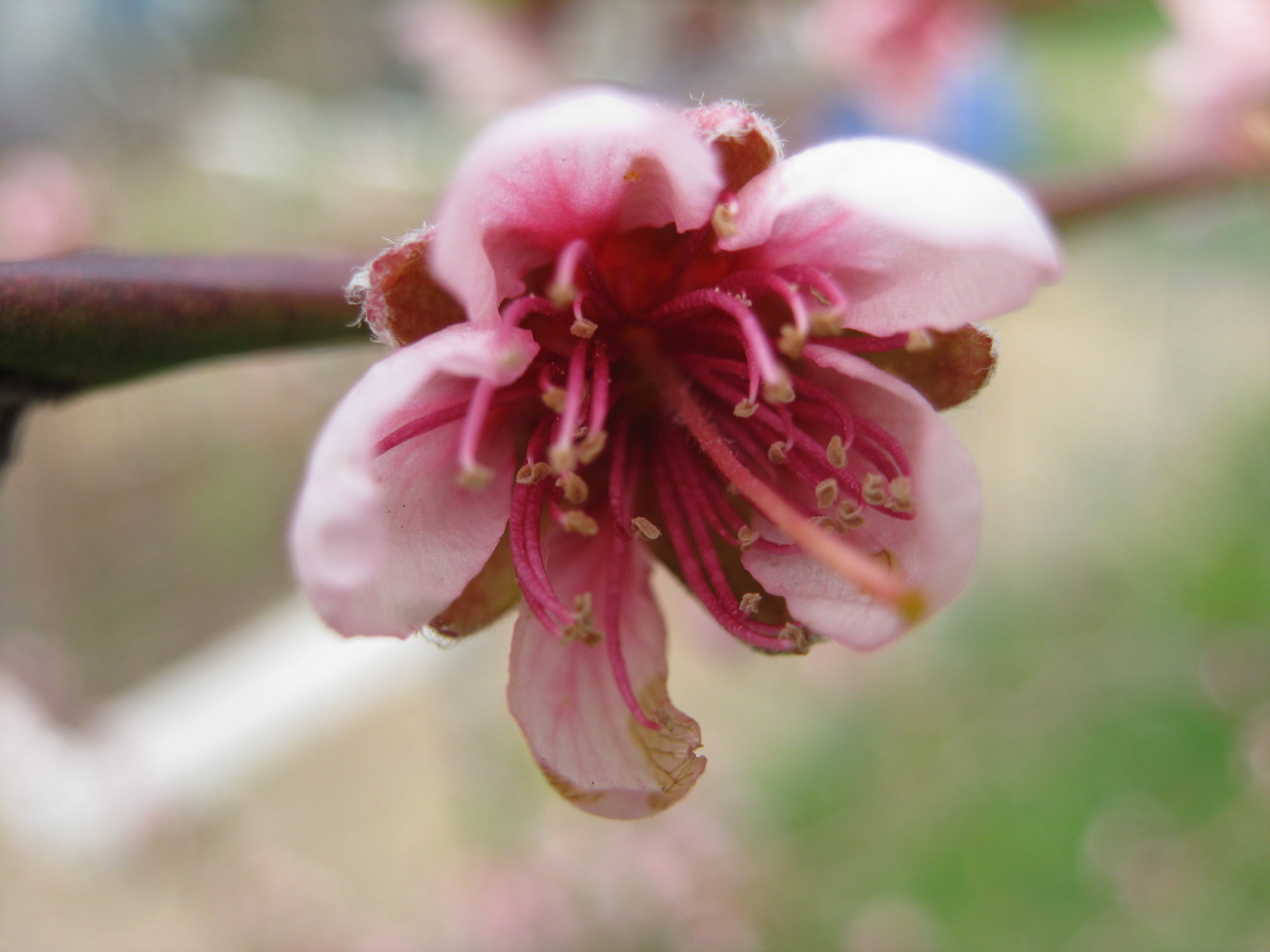
Our three-year old peach tree is full of pink blooms and the bees are busy pollinating them. This year we'll remember to thin the fruits for increased harvest. The younger peach tree and apricot trees have finished blooming.


We have three varieties of sour pie cherry trees--Meteor, North Star, Montmorency. They tend to bloom and ripen at slightly different times.


All eight currant bushes are blooming, seen above. The bushes are heavily loaded this year and we're hoping for an overflow crop. We're looking forward to a large batch of currant jam.


Finally, the ubiquitous dandelions have begun to bloom. Most folks see them as weeds, but to me they are bee food.

Enjoy the spring blossoms!

Tuesday, August 16, 2011

Peaches Dropping Prematurely

Our little peach tree has been loaded with fruit this summer, and we've been anxiously anticipating harvest of these delicious morsels. This tree was planted as a bare root stick only three years ago, and we've been delighted in its growth. But in the last week or so, we've been noticing small green peaches fallen to the ground. At first, it was just a little peach here and there. I didn't know if I should blame the chipmunks or the robins. Today, however, at least a dozen peaches dropped to the ground and they're not quite ripe. Hang on, little peaches!

A bit of internet research has revealed my ignorance. My brave peach tree has done very well holding on to all its fruit for so long. I should have thinned the crop weeks ago, when the fruits were the size of a cherry or grape. Peaches should not be touching each other on the branches; they should grow at least three to six inches apart on the branches. Otherwise, I'll end up with lots of teeny little fruits rather than a harvest of reasonable sized peaches.

We picked some green fruit off the tree this afternoon that we hope will ripen well enough to make into crisp or cobbler. Meanwhile, there are still quite a few peaches on the tree that should mature soon.

Live and learn.....

Tuesday, August 2, 2011

Controlling Japanese Beetles

Japanese beetles are a common garden pest. They invade in mid-summer, usually from early July to the middle of August. They are voracious leaf-eaters. In my garden they seem to focus on fruit trees, especially the tender new trees, as well as grapes and raspberries.

It's not possible to eradicate the little buggers, so I'm concentrating on controlling them enough to limit damage. A few years ago we tried Japanese beetle traps, which use a pheromone to lure the bugs into the trap. It was successful (and disgusting to clean out), but some studies indicate that the traps actually increase the population of beetles in a property.

The same year that we used traps, we gave one application of beneficial nematodes to the lawn. This will help reduce the growth of the grubs in the grass and should last a few years. We also applied milky spore, another biological control method.

Lately, we've been using more immediate and practical controls. Hand picking the little rascals and crushing them between thumb and forefinger is icky, but it allows us to feed the bugs to the chickens. Most gardeners who hand pick just toss the bugs into a jar of soapy water. Finally, we let the hens into the lawn each evening to graze beneath the fruit trees. They enjoy scratching and pecking the grubs and beetles.

Japanese beetles won't kill a tree or plant, but the leaf damage weakens and stresses. The apricot tree in the photo above shows almost lacy leaves from beetle damage. The trees will survive to next year, and we'll continue to pick bugs during the most intense weeks of summer. Soon the apricots will make it all worthwhile.

Wednesday, June 29, 2011

Foraging for Cherries

Here at Red Bucket Farm we have three cherry trees in our orchard in the side yard. The trees are different varieties of sour pie cherries---North Star, Montmorency and Meteor---although I have no idea which tree is which variety. (Note to self: write it down!) In the photo above, the scrawny tree in the foreground is the tree which provides the most fruit, while the largest tree at the end of the line provides rather little fruit. These cherry trees were planted from bare root stock about four years ago.

As an urban farmer in a residential neighborhood, it's easy to see what my neighbors are growing. For several years, I've noticed a beautiful cherry tree at a home several blocks from my house. Every spring, I notice that tree bloom and produce fruit. I also watch the fruit slowly overripen and fall to the ground. Last year I nearly knocked on their door to ask if I could harvest the fruit, but I never quite mustered the courage or time to do it.

Last week I sorta-kinda got my chance. We were walking the dog at dusk past the house with the cherry tree. In the diminishing light I noticed that the cherry tree had been heavily pruned. The branches, laden with fruit, were laying in a pile at the curb. We quickly walked the dog home and returned with the car, squeezing the awkward branches into the trunk of our old economy sedan.

When we got the branches home, we realized that most of the fruit was not quite ready to harvest. We propped up the branches in a five gallon bucket of water and hoped that the fruit would finish maturing in a few days. So far, this seems to be working. At least half of the fruit is turning pink and red. The other half is shriveling, but we'll salvage what we can.

Meanwhile, another seemingly neglected cherry tree has caught my attention. I wonder if I'll be knocking on any doors?

Wednesday, May 11, 2011

Spring Blossoms

We have the usual spring blossoms at Red Bucket Farm---tulips, daffodils, trillium, bleeding heart, wood violets, jack-in-the-pulpit, and dandelions (good for the bees).

I'm thrilled to report that the cherry trees and the established peach tree are blooming. And yes, the bees are busy pollinating.

We also have good old fashioned spring crops like rhubarb and asparagus that have just emerged. The snap peas have sprouted in the raised bed along with spinach and swiss chard. Inside the greenhouse, the potted blueberries are blooming well ahead of the outdoor blueberry bushes.

My currant bushes have been established for a few years. They were the first "crop" that I attempted to grow. I appreciate these old standards that have somehow fallen out of fashion. I love currant jam. And if you've never tasted currant sauce on vanilla ice cream, well, you're missing out on something special.

I'd stay and chat, but there's work on the farm. Thanks for visiting!

Sunday, March 27, 2011

Bare Root Room Open

It's a true harbinger of spring and a moment of happiness in the heart of every gardener. I'm referring to the weekend that the local garden center hangs out the sign reading "Bare Root Room Open."

For a few weeks each spring, the garden center sells a variety of bushes and trees "bare root."  Dormant plants are displayed in a chilly storage room, sorted into bins and labeled. They look like dead sticks with a few branches above and a few roots below.

This is not glamorous shopping. Gardeners who buy plants this way are going on faith that this will soon be a viable plant. The advantage to acquiring plants this way is primarily cost savings. Fruit trees cost around $25 bare root rather than $40 potted later in the spring. The other main advantage is the reduced bulk. We easily loaded four bushes and three trees in the trunk of our economy sedan.
We soaked the new items overnight in buckets of water, and today planted three new fruit trees: a Contender Peach tree, a Chinese apricot and a Goldcot Apricot. We also potted a Brown Turkey fig tree and four blueberry bushes (Blueray, Northland, Patriot and Rubel). The blueberries will get transferred to the ground when the planter is terraced later this spring.

Don't wait---the bare root opportunity only lasts a few weeks. Once the dormant branches start to sprout, it's time to pot them and then the bare root room is closed again until next year. Besides, planting trees in the partially frozen ground is fun and tells a good story later.